Long before Freycinet became the name of a contemporary House, it belonged to a family whose story was written at sea. Exploration, scientific curiosity and a fascination for distant horizons have shaped its legacy.
This journey connects not only places, but also the traces they left behind: a map, the drawing of a ship, the pages of a journal. Scroll to follow their course.
02
The Origins
Two Brothers, Two Destinies
The Call of the Sea
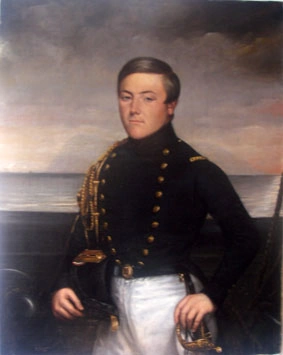
Louis-Henri and Louis-Claude de Saulces de Freycinet entered naval life at an early age. Both took part in Nicolas Baudin’s expedition to the southern lands: Henri aboard the Géographe, Louis aboard the Naturaliste, before later taking command of the Casuarina.
Their paths would eventually diverge. The voyage of the Uranie retraced here belongs to Louis, yet their shared connection to navigation and Australia runs through the history of the family.
Portrait preserved within the family archives.
03
Toulon
September 1817
The Uranie Sets Sail
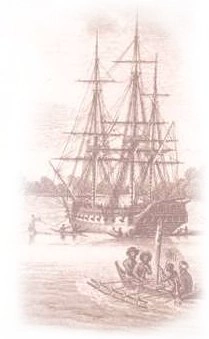
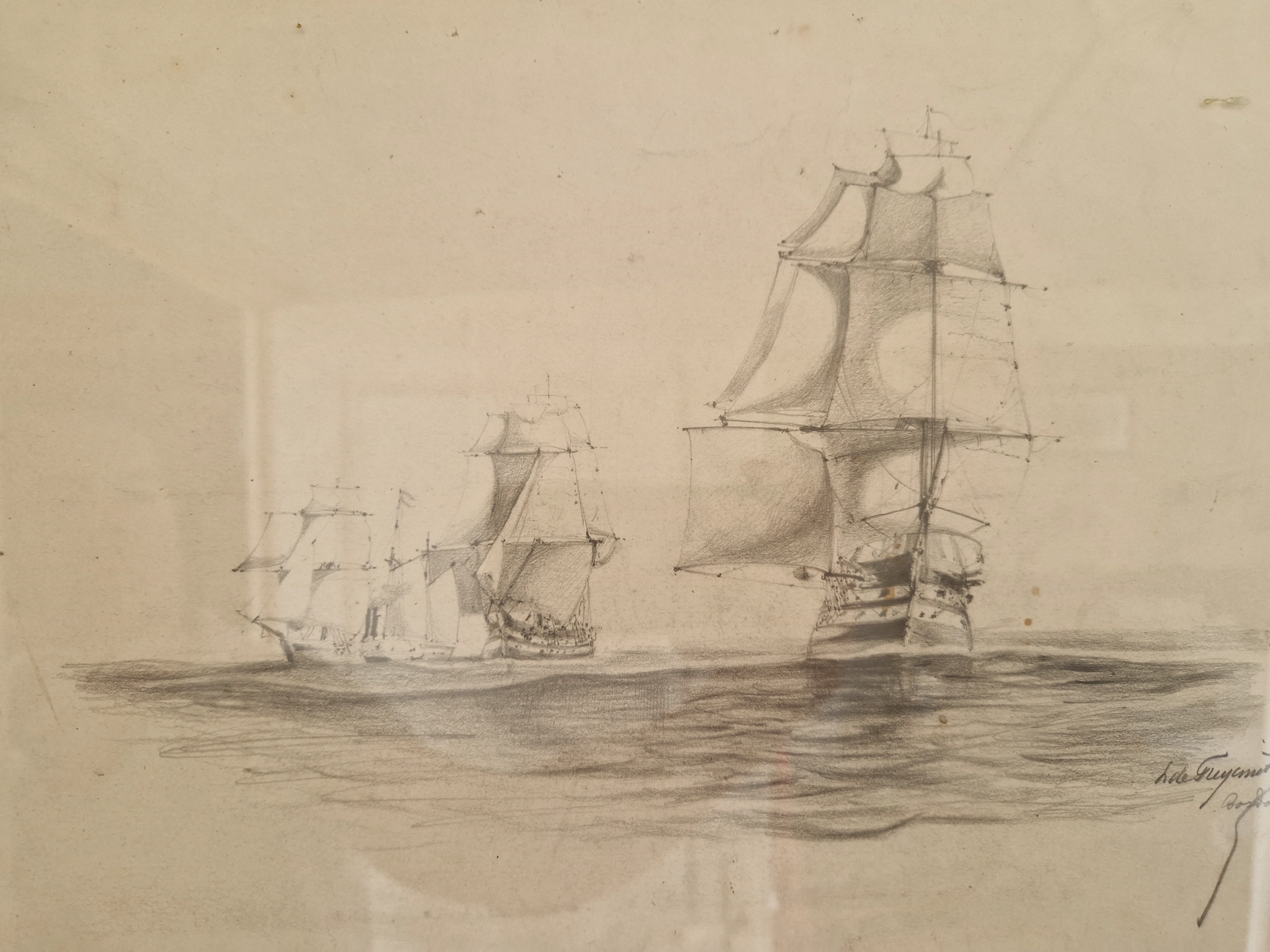
Louis de Freycinet leaves Toulon aboard the Uranie on a scientific expedition around the world. The ship carries instruments, scholars and artists, together with the ambition to observe and document the world with unprecedented rigour.
Terrestrial magnetism, astronomy, meteorology, hydrography and natural history accompany the voyage. The corvette becomes an observatory in motion.
The Uranie, at the heart of the 1817–1820 voyage.
04
Beyond the Mediterranean
Aboard the Uranie
Rose, Another Voice of the Voyage
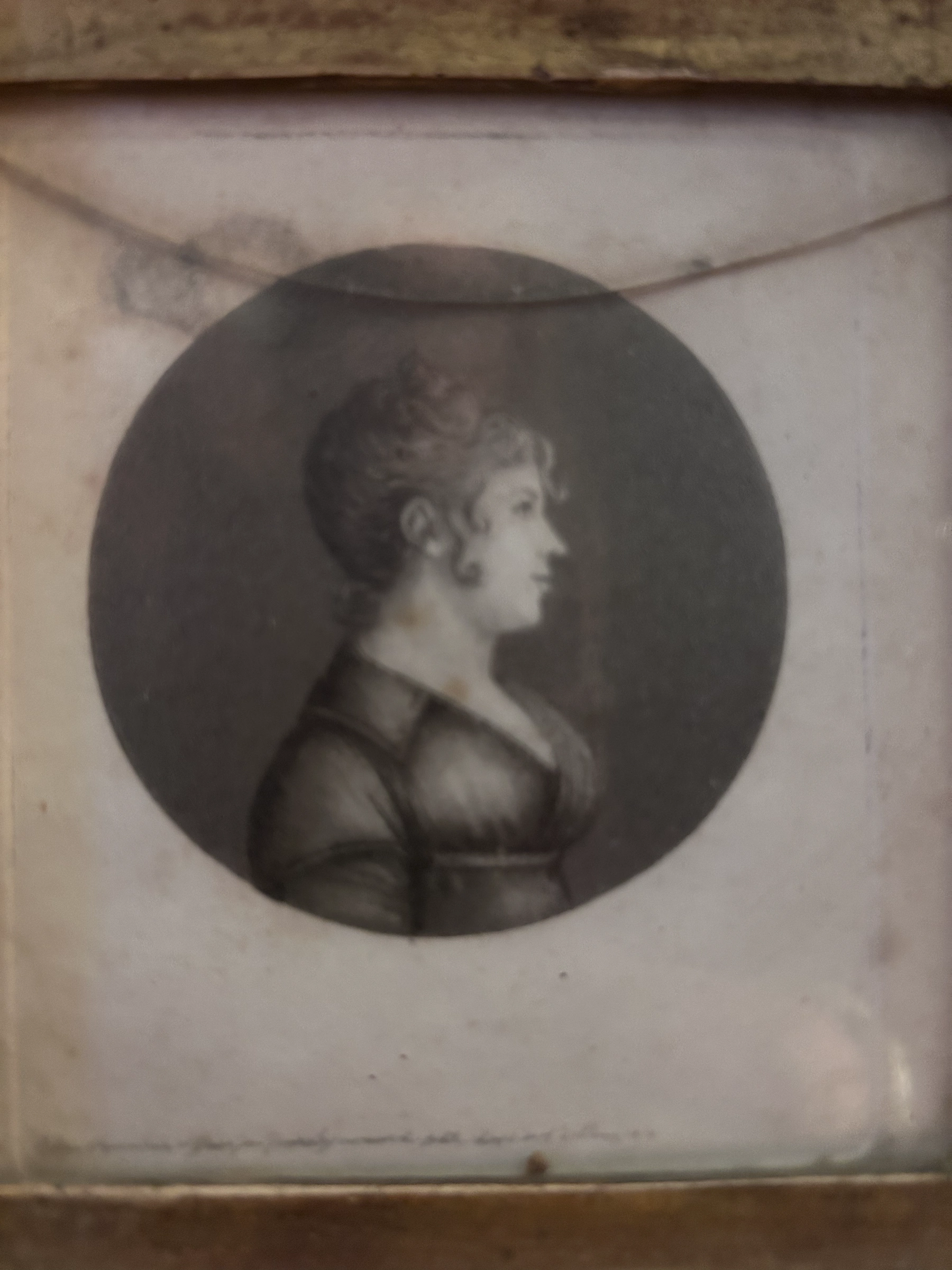
Rose de Freycinet chose to accompany Louis. She secretly joined the expedition disguised as a man. Alongside the official account, her letters and journal reveal a more intimate experience of the voyage.
Life aboard ship, encounters, customs and moments of uncertainty all find their place in her writing. Her perspective lends a human dimension to the journey that scientific observations alone could never convey.
Portrait from the family archives, evoking the story of Rose.
05
Atlantic Ocean
Rio de Janeiro
A Shore, Then the Open Sea
After the islands and the crossing of the Atlantic, Rio marks a new chapter in the journey. The expedition alternates between approaches to distant shores and long days when the ocean alone fills the horizon.
A rhythm begins to define the voyage: navigate, observe, preserve a trace, then depart once more. From Brazil, the course stretches towards southern Africa.
06
Southern Africa
Cape of Good Hope
Into Another Ocean
At the southern edge of Africa, the route bends around the continent. The Atlantic slowly recedes behind the ship as the Indian Ocean opens a new chapter of the expedition.
The map reveals what the names of distant ports alone cannot express: the distances travelled, the deviations endured and the time suspended between two shores. Here, the movement of the ship becomes the narrative.
07
Port Louis
Indian Ocean
Observing, Day After Day
Mauritius punctuates the crossing of the Indian Ocean. Beyond the succession of destinations, the expedition continues its patient work: repeating observations, assembling collections and recording what will later be studied upon their return.
The ship is at once a means of passage, a place of life and a scientific workshop. Through the archives, this fleeting experience acquires a lasting form.
Drawing from the editorial archives, evoking life at sea.
08
Shark Bay · Australia
A Story Already Bound to the Southern Lands
Tracing the Contours of a Continent
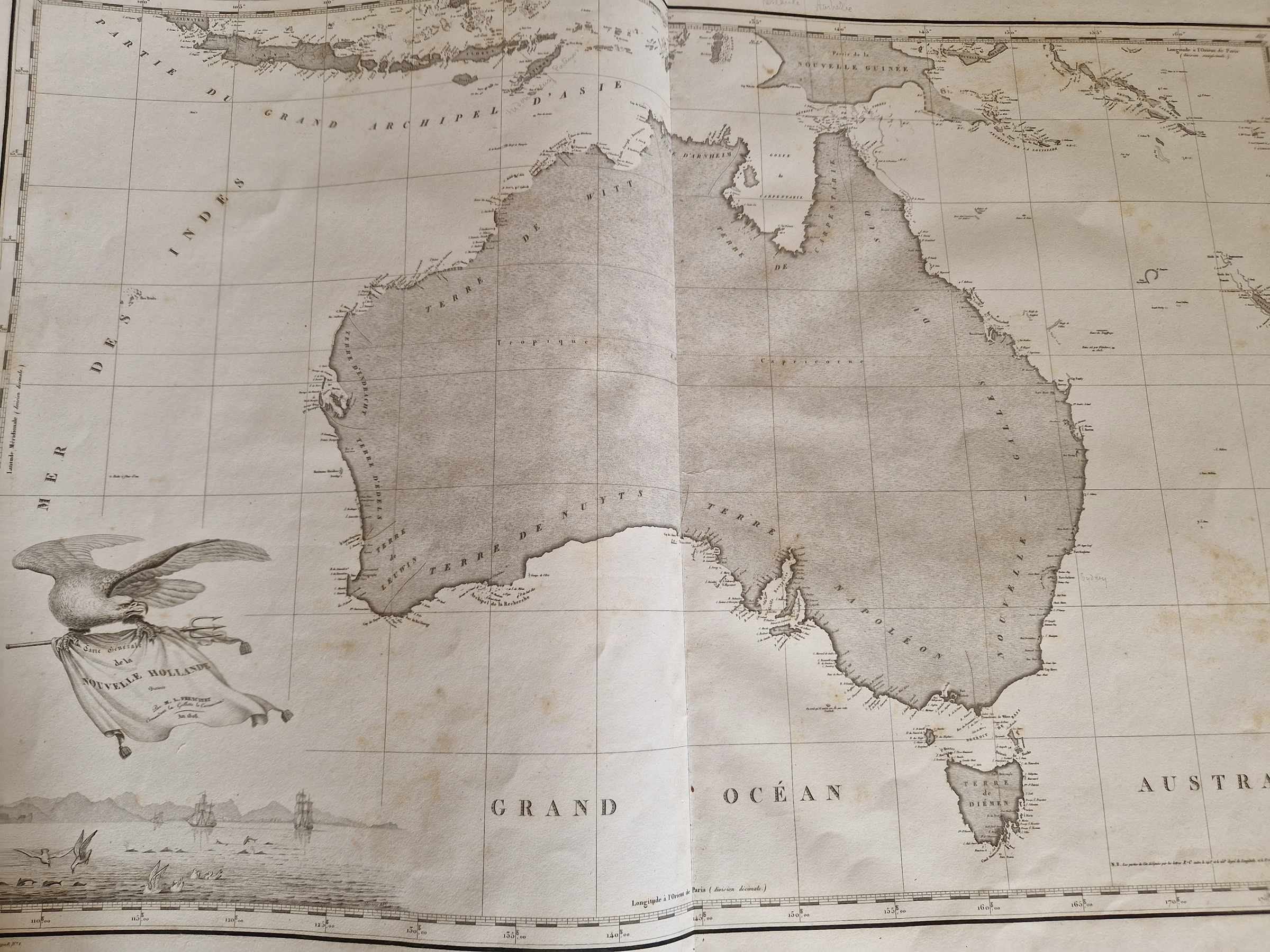
Australia holds a singular place in the history of the Freycinet family. Following the Baudin expedition, Louis contributed to the preparation of the charts and plans produced from its surveys.
His Carte Générale de la Nouvelle Hollande was published in 1811. Bringing together observations and earlier knowledge, it offered a comprehensive representation of the continent. Created before the voyage of the Uranie, this document reveals the cartographic legacy from which the later expedition emerged.
Map dated 1811, preceding the circumnavigation of the Uranie.
09
Timor · Dili
Towards the Archipelagos
Among the Islands
From Australia, the route turns north towards Timor before threading its way through the archipelagos. Coastlines draw closer and directions shift, until the vastness of the Pacific once again takes hold.
The course traced here is an evocation of the maritime journey. It reveals the sequence of regions crossed without claiming to reproduce every mile of the historical route.
10
Guam · Mariana Islands
Pacific Ocean
A World Without Edges
From the Mariana Islands, the voyage continues towards Hawaii. Islands become distant markers scattered across an immensity that a flat map can scarcely contain.
The world turns without interrupting the journey. Crossing the antimeridian marks no ending: the ship continues on its course, while the line behind it preserves the memory of its wake.
11
Hawaii
In the Heart of the Pacific
Places, and the Lives Within Them
The ports of call are more than points upon a map. Rose’s journal records the people encountered, local customs and scenes of everyday life that lie beyond purely geographical observation.
The meeting of personal narratives and scientific accounts allows the voyage to be seen from several perspectives. From Hawaii, the Uranie turns south once again.
12
Sydney · Port Jackson
Before the Southern Latitudes
Australia, Once More
The Uranie reaches Sydney before beginning the long passage across the South Pacific. Australia returns as a thread connecting the first expeditions of the Freycinet brothers with this new circumnavigation.
Beyond Port Jackson, the route descends south of New Zealand before extending towards the Americas. For a moment, the documents fall away and the sheer scale of the ocean takes their place.
13
Cape Horn
At the Edge of South America
Returning to the Atlantic
After crossing the Pacific, the southern reaches of the American continent form another threshold. The route rounds Cape Horn and returns to the Atlantic.
On a map, the change of course appears almost effortless. At sea, it belongs to the same long story of navigation, each passage preparing the next. The Falkland Islands draw near.
14
Falkland Islands
1820
The Ship Is Lost. The Story Continues.
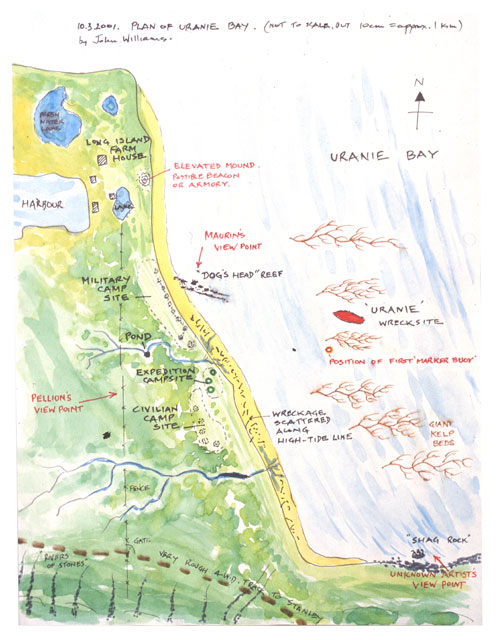
The Uranie is wrecked in the Falkland Islands in 1820. The loss of the ship does not bring the expedition to an end: the return journey continues aboard another vessel, renamed the Physicienne.
Documents and memories carry forward what the ship itself can no longer bear. Much later, investigations of the wreck would once again give tangible form to the Uranie’s final chapter.
Document from the editorial archives relating to the wreck site; not a contemporary depiction of the shipwreck.
15
Montevideo · Rio de Janeiro
The Return Journey
Gathering the Traces
The route climbs north through the Atlantic, passing Montevideo before returning to Rio. The observations, collections and personal accounts accumulated throughout the voyage now begin their journey towards another life, on paper.
The publications born from the expedition would explore navigation, hydrography, meteorology and natural history among other disciplines. The voyage continues in another form: through knowledge and transmission.
16
Cherbourg · Le Havre
Return to France
From Voyage to Archive
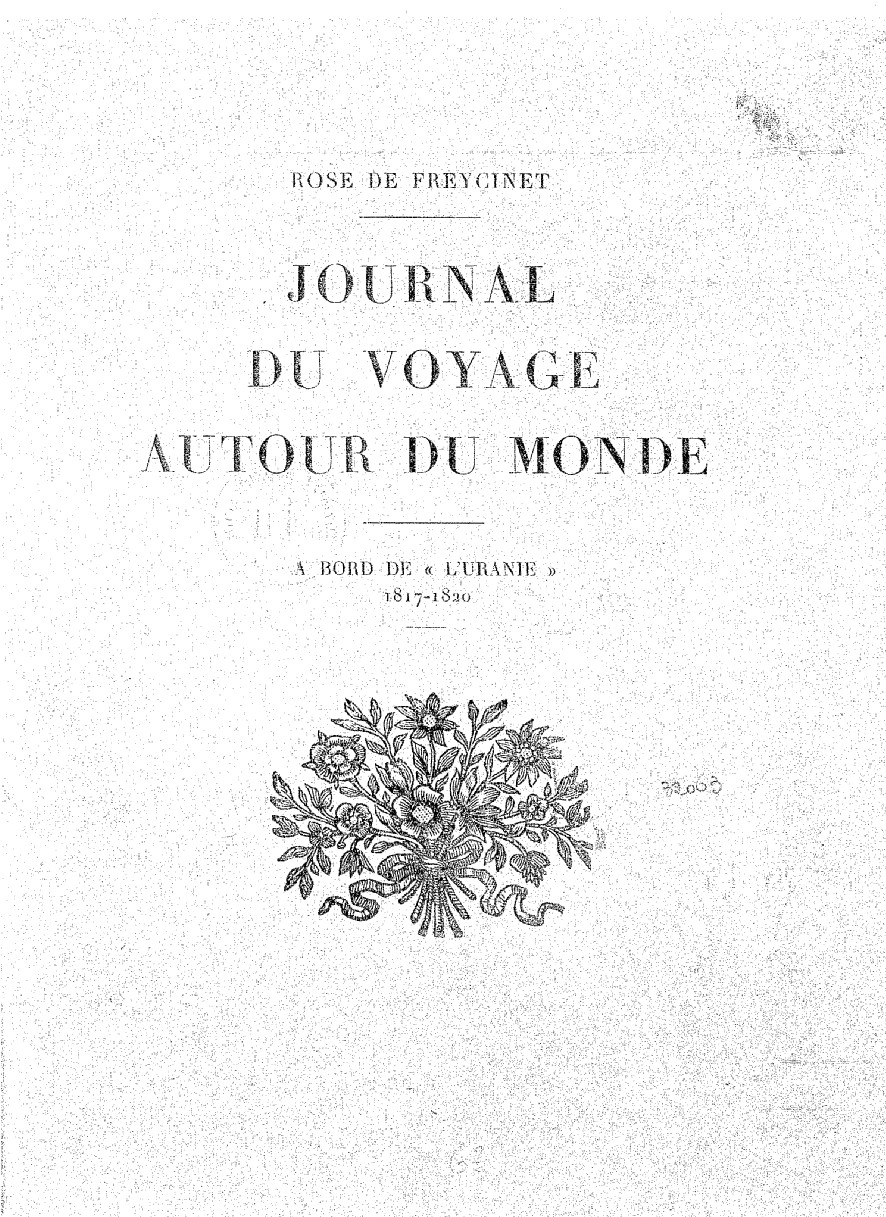
As the journey reaches its end, another story begins: that of the maps, books and documents preserved for generations. Rose’s words would eventually be published in 1927, more than a century after the Uranie returned.
Her journal gives voice to a singular perspective within the story of the circumnavigation. Its publication is a reminder that some journeys continue to reveal themselves long after they have ended.
Rose de Freycinet’s journal, published in 1927.
17
From the Archive to the Atelier
Henry de Freycinet Today
A Legacy Made to Travel
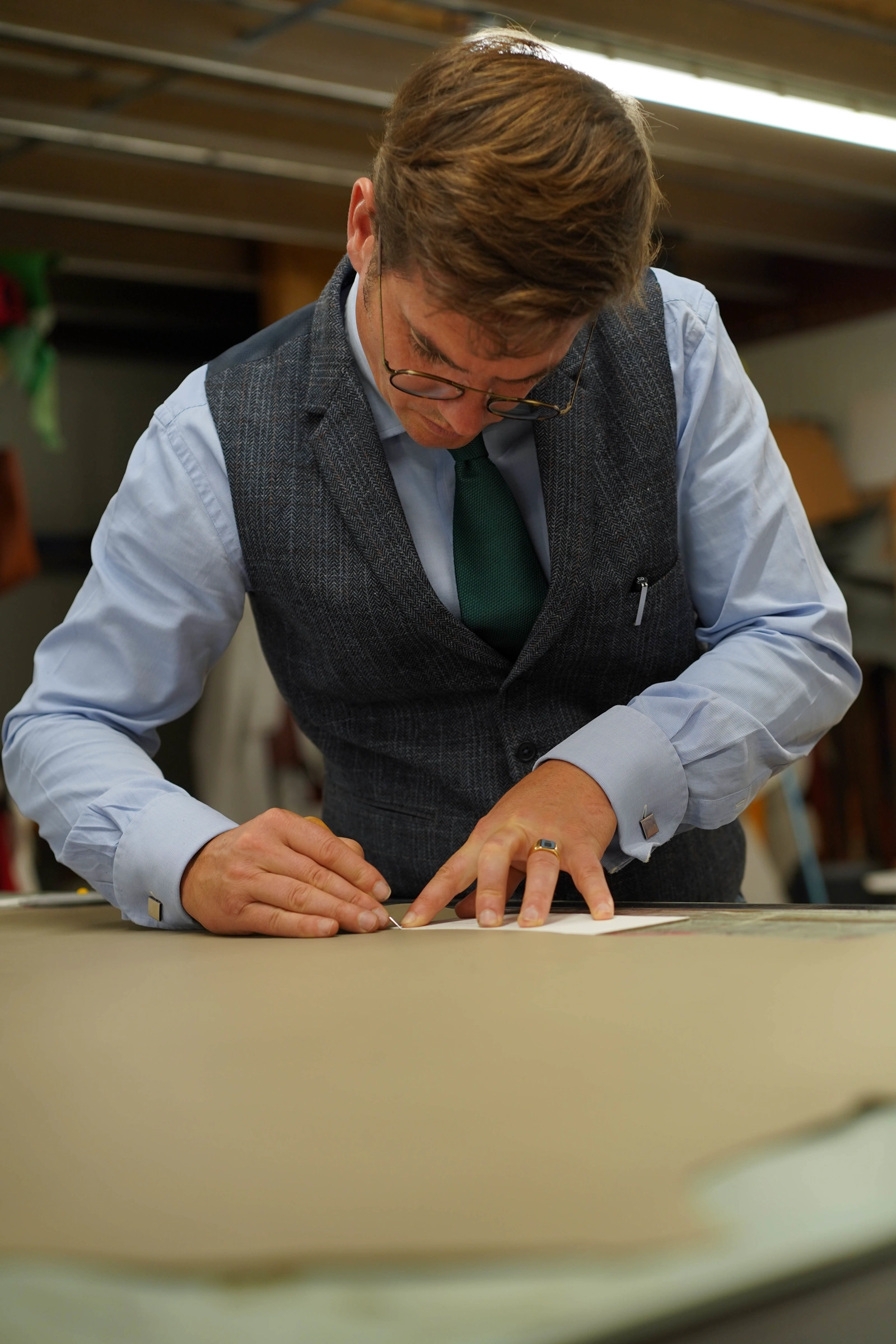
A descendant of Louis-Henri and custodian of the family archives, Henry de Freycinet preserves and shares the documents that connect the family to its past. Through his work as an artisan, he carries another story into the present: one of gesture, material and craftsmanship.
The House brings these two threads together. Not to recreate the nineteenth century, but to give contemporary form to its spirit of curiosity, movement and purpose.
Where the memory of the voyage meets contemporary craftsmanship.
Long before Freycinet became the name of a contemporary House, it belonged to a family whose story was written at sea. Exploration, scientific curiosity and a fascination for distant horizons have shaped its legacy.
This journey connects not only places, but also the traces they left behind: a map, the drawing of a ship, the pages of a journal. Scroll to follow their course.
02
The Origins
Two Brothers, Two Destinies
The Call of the Sea
Louis-Henri and Louis-Claude de Saulces de Freycinet entered naval life at an early age. Both took part in Nicolas Baudin’s expedition to the southern lands: Henri aboard the Géographe, Louis aboard the Naturaliste, before later taking command of the Casuarina.
Their paths would eventually diverge. The voyage of the Uranie retraced here belongs to Louis, yet their shared connection to navigation and Australia runs through the history of the family.
Portrait preserved within the family archives.
03
Toulon
September 1817
The Uranie Sets Sail
Louis de Freycinet leaves Toulon aboard the Uranie on a scientific expedition around the world. The ship carries instruments, scholars and artists, together with the ambition to observe and document the world with unprecedented rigour.
Terrestrial magnetism, astronomy, meteorology, hydrography and natural history accompany the voyage. The corvette becomes an observatory in motion.
The Uranie, at the heart of the 1817–1820 voyage.
04
Beyond the Mediterranean
Aboard the Uranie
Rose, Another Voice of the Voyage
Rose de Freycinet chose to accompany Louis. She secretly joined the expedition disguised as a man. Alongside the official account, her letters and journal reveal a more intimate experience of the voyage.
Life aboard ship, encounters, customs and moments of uncertainty all find their place in her writing. Her perspective lends a human dimension to the journey that scientific observations alone could never convey.
Portrait from the family archives, evoking the story of Rose.
05
Atlantic Ocean
Rio de Janeiro
A Shore, Then the Open Sea
After the islands and the crossing of the Atlantic, Rio marks a new chapter in the journey. The expedition alternates between approaches to distant shores and long days when the ocean alone fills the horizon.
A rhythm begins to define the voyage: navigate, observe, preserve a trace, then depart once more. From Brazil, the course stretches towards southern Africa.
06
Southern Africa
Cape of Good Hope
Into Another Ocean
At the southern edge of Africa, the route bends around the continent. The Atlantic slowly recedes behind the ship as the Indian Ocean opens a new chapter of the expedition.
The map reveals what the names of distant ports alone cannot express: the distances travelled, the deviations endured and the time suspended between two shores. Here, the movement of the ship becomes the narrative.
07
Port Louis
Indian Ocean
Observing, Day After Day
Mauritius punctuates the crossing of the Indian Ocean. Beyond the succession of destinations, the expedition continues its patient work: repeating observations, assembling collections and recording what will later be studied upon their return.
The ship is at once a means of passage, a place of life and a scientific workshop. Through the archives, this fleeting experience acquires a lasting form.
Drawing from the editorial archives, evoking life at sea.
08
Shark Bay · Australia
A Story Already Bound to the Southern Lands
Tracing the Contours of a Continent
Australia holds a singular place in the history of the Freycinet family. Following the Baudin expedition, Louis contributed to the preparation of the charts and plans produced from its surveys.
His Carte Générale de la Nouvelle Hollande was published in 1811. Bringing together observations and earlier knowledge, it offered a comprehensive representation of the continent. Created before the voyage of the Uranie, this document reveals the cartographic legacy from which the later expedition emerged.
Map dated 1811, preceding the circumnavigation of the Uranie.
09
Timor · Dili
Towards the Archipelagos
Among the Islands
From Australia, the route turns north towards Timor before threading its way through the archipelagos. Coastlines draw closer and directions shift, until the vastness of the Pacific once again takes hold.
The course traced here is an evocation of the maritime journey. It reveals the sequence of regions crossed without claiming to reproduce every mile of the historical route.
10
Guam · Mariana Islands
Pacific Ocean
A World Without Edges
From the Mariana Islands, the voyage continues towards Hawaii. Islands become distant markers scattered across an immensity that a flat map can scarcely contain.
The world turns without interrupting the journey. Crossing the antimeridian marks no ending: the ship continues on its course, while the line behind it preserves the memory of its wake.
11
Hawaii
In the Heart of the Pacific
Places, and the Lives Within Them
The ports of call are more than points upon a map. Rose’s journal records the people encountered, local customs and scenes of everyday life that lie beyond purely geographical observation.
The meeting of personal narratives and scientific accounts allows the voyage to be seen from several perspectives. From Hawaii, the Uranie turns south once again.
12
Sydney · Port Jackson
Before the Southern Latitudes
Australia, Once More
The Uranie reaches Sydney before beginning the long passage across the South Pacific. Australia returns as a thread connecting the first expeditions of the Freycinet brothers with this new circumnavigation.
Beyond Port Jackson, the route descends south of New Zealand before extending towards the Americas. For a moment, the documents fall away and the sheer scale of the ocean takes their place.
13
Cape Horn
At the Edge of South America
Returning to the Atlantic
After crossing the Pacific, the southern reaches of the American continent form another threshold. The route rounds Cape Horn and returns to the Atlantic.
On a map, the change of course appears almost effortless. At sea, it belongs to the same long story of navigation, each passage preparing the next. The Falkland Islands draw near.
14
Falkland Islands
1820
The Ship Is Lost. The Story Continues.
The Uranie is wrecked in the Falkland Islands in 1820. The loss of the ship does not bring the expedition to an end: the return journey continues aboard another vessel, renamed the Physicienne.
Documents and memories carry forward what the ship itself can no longer bear. Much later, investigations of the wreck would once again give tangible form to the Uranie’s final chapter.
Document from the editorial archives relating to the wreck site; not a contemporary depiction of the shipwreck.
15
Montevideo · Rio de Janeiro
The Return Journey
Gathering the Traces
The route climbs north through the Atlantic, passing Montevideo before returning to Rio. The observations, collections and personal accounts accumulated throughout the voyage now begin their journey towards another life, on paper.
The publications born from the expedition would explore navigation, hydrography, meteorology and natural history among other disciplines. The voyage continues in another form: through knowledge and transmission.
16
Cherbourg · Le Havre
Return to France
From Voyage to Archive
As the journey reaches its end, another story begins: that of the maps, books and documents preserved for generations. Rose’s words would eventually be published in 1927, more than a century after the Uranie returned.
Her journal gives voice to a singular perspective within the story of the circumnavigation. Its publication is a reminder that some journeys continue to reveal themselves long after they have ended.
Rose de Freycinet’s journal, published in 1927.
17
From the Archive to the Atelier
Henry de Freycinet Today
A Legacy Made to Travel
A descendant of Louis-Henri and custodian of the family archives, Henry de Freycinet preserves and shares the documents that connect the family to its past. Through his work as an artisan, he carries another story into the present: one of gesture, material and craftsmanship.
The House brings these two threads together. Not to recreate the nineteenth century, but to give contemporary form to its spirit of curiosity, movement and purpose.
Where the memory of the voyage meets contemporary craftsmanship.
Ce site peut utiliser des cookies pour ameliorer votre experience. Vous pouvez accepter ou continuer sans accepter.